


Rose Guano Cave Important Stop for Migrating Bats on BLM-Managed Public Lands in Nevada
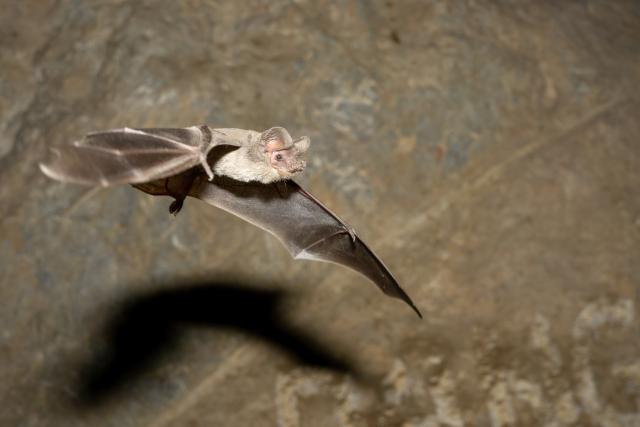
Tucked within eastern Nevada public lands is a haven for bats: Rose Guano Cave.
Nestled in the remote landscape of White Pine County, Rose Guano Cave serves as critical habitat for one of the largest concentrations of bats in the region and provides an important stopover during migration from July through October each year. The number of bats using Rose Guano Cave fluctuates annually, with population estimates typically ranging between 1 and 3 million bats.
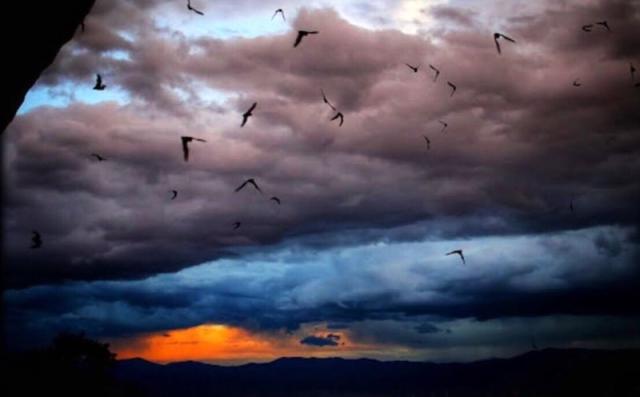
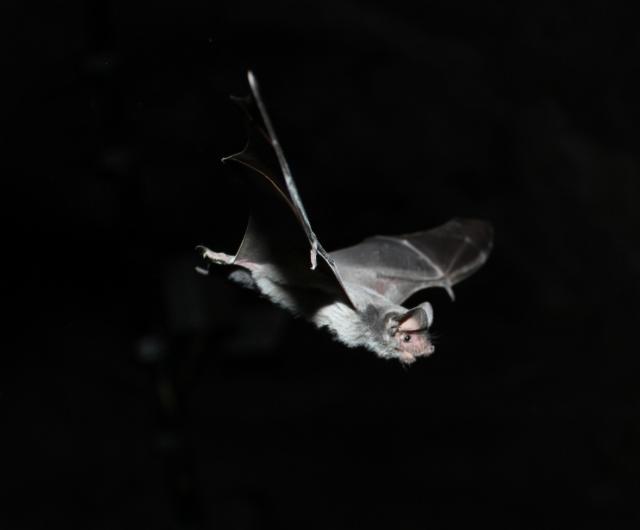
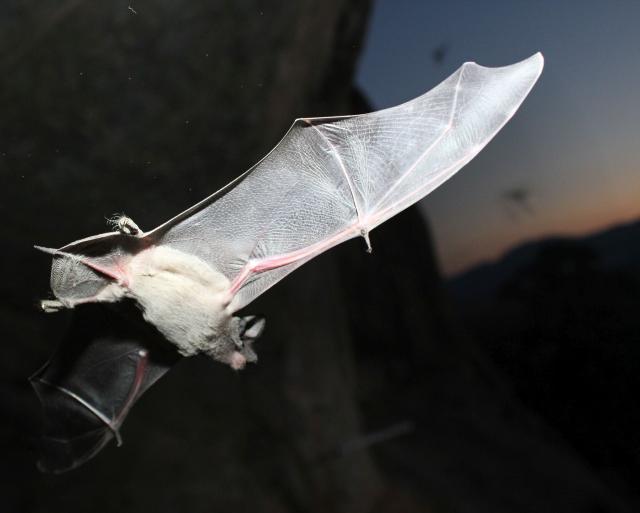
Rose Guano Bat Cave is perhaps best known as home to one of the largest-known colonies of Brazilian free-tailed bats (Tadarida brasiliensis), also called Mexican free-tailed bats, in Nevada.
The Mexican free-tailed bat is a medium-sized bat with gray to dark brown fur, large ears, and wrinkled lips. Its most distinctive trait is a long tail that extends beyond the tail membrane, making it easy to distinguish from other bat species. It is also an exceptionally fast flyer, capable of reaching speeds of nearly 60 miles per hour, according to the Nevada Department of Wildlife (NDOW). Mexican free-tailed bats often roost in caves close to water but can also be found sheltering in mines, bridges, tunnels, and abandoned structures.
In North America, Mexican free-tailed bats migrate seasonally, traveling between the central and southern United States and Mexico, according to Bat Conservation International (BCI). Nightly roost emergences of Tadarida brasiliensis bats can even be visible on weather radar, according to BCI.
As the sun sets, thousands of bats leave the Rose Guano Cave in search of food. Together, they can consume hundreds of millions of insects in a single night.
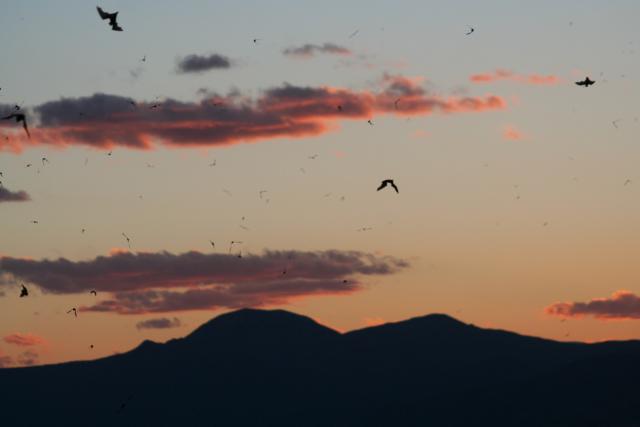
By feeding on insects that can damage crops, these bats help reduce pest pressure on nearby agricultural lands, supporting healthier crops and reducing the need for chemical pest control. Their nightly work likely saves local agriculture tens of thousands of dollars each year. Overall, researchers estimate bats save U.S. farmers at least $3.7 billion every year, according to the U.S. Geological Survey.
While the Rose Guano Cave may appear to be just another rocky feature visible from U.S. Highways 6 and 50, it plays a vital role in the health of Nevada's ecosystems and agricultural communities.
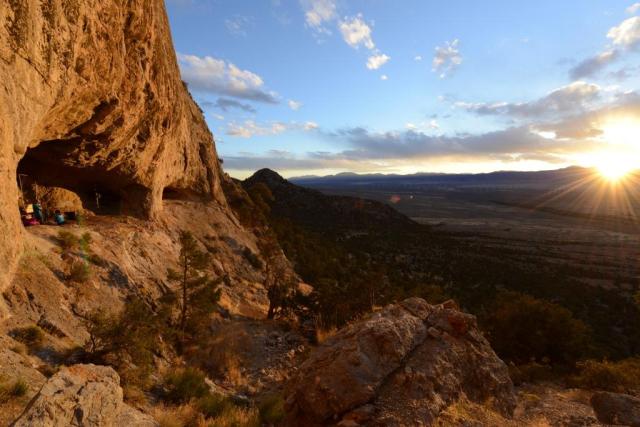
Protecting places like Rose Guano Cave is an important part of the Bureau of Land Management's mission. Under the Federal Cave Resources Protection Act of 1988, Congress directed federal land managers to protect and maintain significant caves on public lands whenever practical. Under this mandate, the BLM works to protect this important habitat while continuing to provide opportunities for the public to experience Nevada's remarkable public lands.
The cave itself is relatively short, extending approximately 483 feet, but it contains two large chambers separated by roughly 50 feet of vertical relief. One of these chambers bears evidence of the cave's unique history. In the early twentieth century, portions of the cave were mined extensively for bat guano, a valuable natural fertilizer, starting in 1913. In 1926, miners drove an adit into the hillside below the cave's natural entrance to access and remove guano deposits. That adit has since been closed to limit human access and help maintain a stable cave environment for bats and other cave resources. In 1970, Rose Guano Bat Cave was designated as Bat Cave and Guano Mine Historic Area due to historic guano mining.
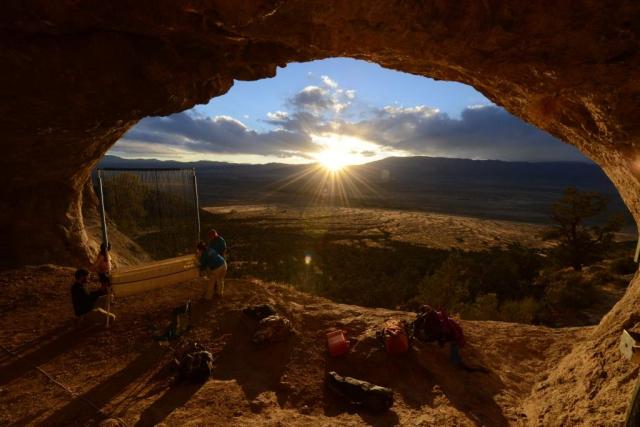
Today, the BLM works to balance public access with the protection of sensitive wildlife habitat in conjunction with partners like NDOW.
Like many wildlife species, bats are sensitive to disturbance. Visitors who encounter bats should remember that they are wild animals and should be observed from a respectful distance.
To safeguard the colony during its most vulnerable periods, Rose Guano Cave is closed annually from April 1 through November 1 during the bat maternity and migratory season. These seasonal restrictions allow bats to raise their young and complete their migrations with minimal disturbance.
To protect both visitors and the cave's sensitive resources, entry into Rose Guano Cave is limited and requires special precautions. Large amounts of bat guano, or poop, can harbor fungal spores that may cause histoplasmosis, a respiratory illness. Individuals interested in learning more about authorized access to Rose Guano Cave should contact the Bureau of Land Management's Ely District Office for current access requirements, seasonal restrictions, and permit information. Bat survey activities in Nevada may also require a scientific collection permit issued by the NDOW.
For visitors to the entrance from the highway, there is an interpretive and informational kiosk placed near the entrance of the cave interpreting the history of the cave, bat use, safety issues, and closure information. Keeping noise to a minimum around the cave entrance helps reduce stress on the colony and supports the bats' natural behaviors.
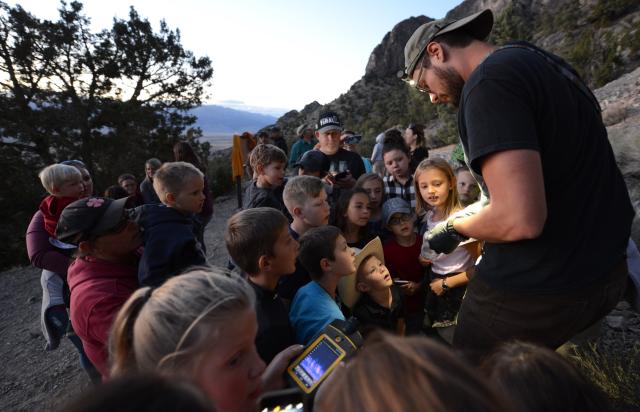
The future of Rose Guano Cave depends on thoughtful stewardship and responsible recreation. By respecting seasonal closures and giving wildlife the space it needs, visitors help preserve an important Nevada resource for future generations.
The next time you travel through eastern Nevada and spot the cave from the highway, remember that within its rocky walls is a thriving colony of bats providing valuable ecological benefits night after night. Even the most unassuming places and wildlife on public lands can have a huge impact on the landscapes and communities around them.
Related Content
Related Stories
Office
702 North Industrial Way
Ely, NV 89301
United States