


Swainson’s Hawks: a remarkable return to California’s Central Valley
Swainson’s Hawks are medium-to-large raptors renowned for their elegant flight and extraordinary migratory journeys. Each year, these hawks travel thousands of miles between their breeding grounds in the western United States and Canada and their wintering sites in Central and South America. California’s Central Valley is especially critical to their life cycle, with 95 percent of the state’s Swainson’s Hawks nesting there.
Upon arrival in the Central Valley, Swainson’s Hawks select nest sites near grasslands or agricultural fields, which offer abundant prey and shelter. During the breeding season, their diet consists mainly of rodents, rabbits, reptiles, and small birds, which are essential for raising their young. Outside the breeding season, they adapt by feeding primarily on insects such as grasshoppers, demonstrating remarkable versatility.

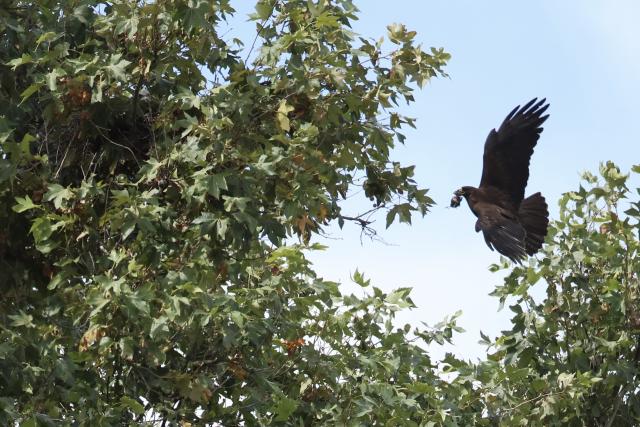
Despite their adaptability, Swainson’s Hawks have faced significant challenges. In 1983, they were listed as Threatened in California due to habitat loss and declining numbers, with only about 375 breeding pairs remaining from an estimated historical population of 17,000. But thanks to conservation and habitat restoration efforts, the population has rebounded, with recent estimates suggesting that around 1,000 breeding pairs now reside in the Central Valley.
However, Swainson’s Hawks remained absent from parts of their historic range for decades. Notably, they had not nested in the Central Valley portion of Shasta County since at least 1980, with the nearest recorded nesting pair prior to 2026 located about 40 miles south in Glenn County. This absence underscored the need for habitat restoration and innovative partnerships to encourage their return.
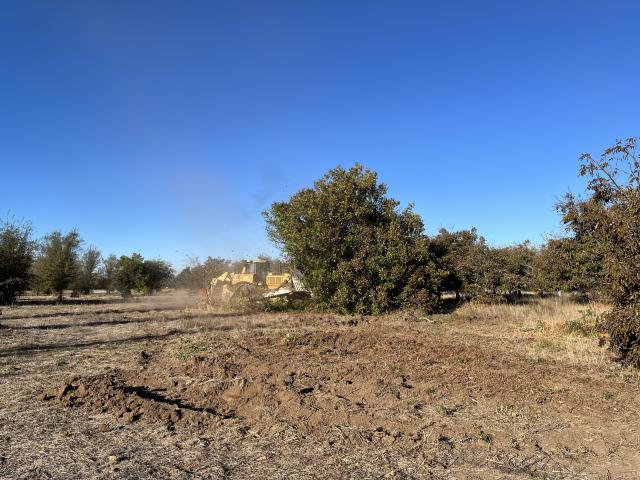
In 2024, a grant from the state of California Wildlife Conservation Board enabled the BLM and River Partners to restore riparian and floodplain habitat near Battle Creek, a vital tributary of the Sacramento River in Shasta County. The project replaced a fallow walnut orchard with native vegetation, supporting the broader vision of the Floodplain Forward Memorandum of Understanding, a multi-agency agreement to expand floodplain projects in the Sacramento River Basin. These efforts aim to improve flood protection, habitat, groundwater recharge, and agricultural resilience. Habitat growth was slow in 2025 but accelerated in 2026, creating diverse environments for wildlife, including Swainson’s Hawks.
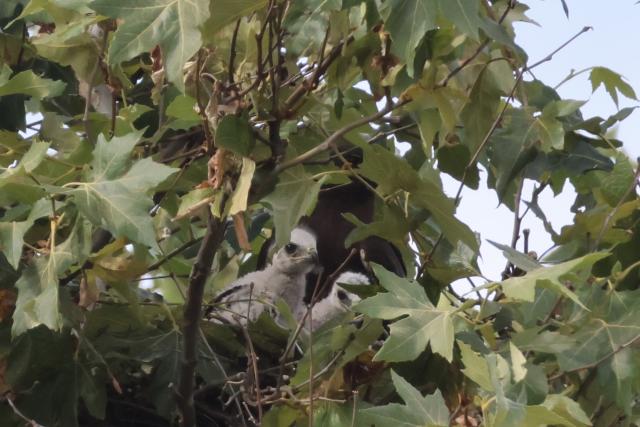
The impact of restoration was soon evident. In May 2026, a pair of Swainson’s Hawks was observed circling the creek in the newly restored area, even engaging in dramatic behaviors such as dive-bombing juvenile bald eagles. On June 15th, a nest was discovered. Over the following weeks, observers witnessed aerial food transfers, with the male delivering rodents and birds to the female, who then brought food to the nest. Eventually, two nestlings were confirmed, marking a significant milestone for the species in Shasta County.

By mid-July, the young hawks had fledged and were seen flying along the creek with their parents nearby. This successful nesting is potentially the first recorded in Shasta County, offering hope for the continued survival of Swainson’s Hawks in the region. The story of their return exemplifies how collaboration and habitat restoration can make a difference, ensuring these remarkable raptors continue to grace California’s skies for generations to come.
Related Stories
- Celebrating 30 Years of California Condor Recovery at Vermilion Cliffs National Monument
- Using Beavers as Partners in Riparian Habitat Restoration in Las Cienegas National Conservation Area
- BLM Fishing Derby brings Americans Outside for recreation and stewardship in Imperial Valley, California
- One Mile Closer
- Fossils, furs and a few sparks at Kemmerer Outdoor Discovery Day