


Postcards Become Monthly Creative Tradition at Red Rock Canyon National Conservation Area in Nevada
"Postcards from Red Rock" has become one of Red Rock Canyon National Conservation Area in Nevada's most creative and consistently well-loved monthly public programs. Each session invites visitors to slow down and create a handmade postcard inspired by the landscapes around them. What began as a simple interpretive idea has grown into a signature experience for families, hikers, travelers, and returning locals alike.
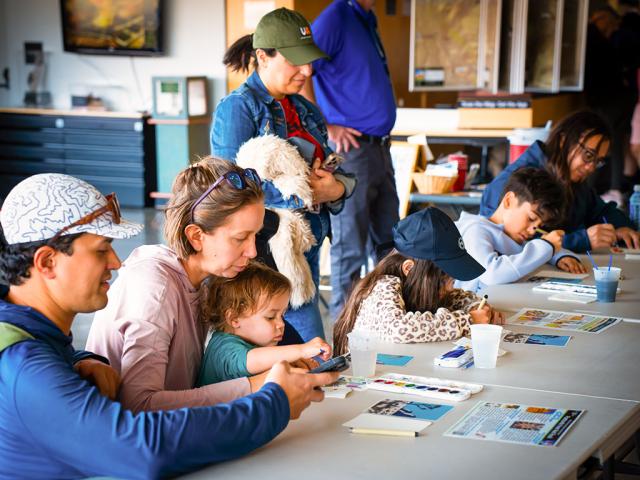
The Red Rock Canyon National Conservation Area, a part of the Bureau of Land Management (BLM)’s National Conservation Lands, is located just a few miles west of Las Vegas and encompasses 195,819 acres within the Mojave Desert. Every month, the interpretive team introduces a new art technique that encourages visitors to engage with Red Rock National Conservation Area’s scenery in a fresh way.
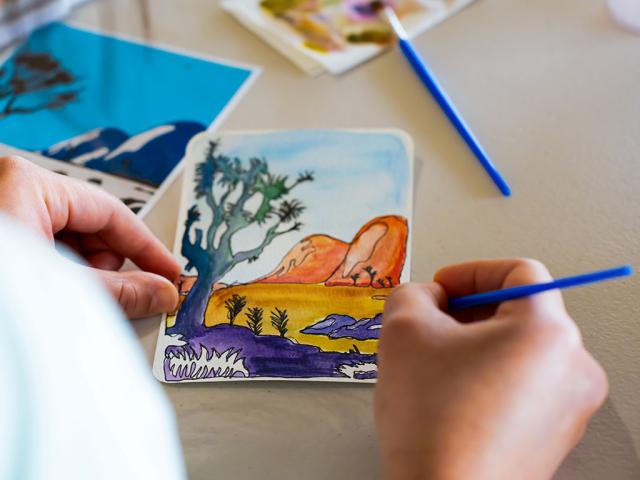
Some months feature cyanotype sun prints, using pretreated paper that reacts to sunlight to create striking blue‑and‑white desert silhouettes. Other sessions explore single‑line sketching, watercolor painting, pop‑art cactus designs, or expressive night‑sky splatter paint. Instructions and materials are prepared in advance by the interpretive staff, including prototype postcards and pre‑cut supplies documented in program planning files and messages.
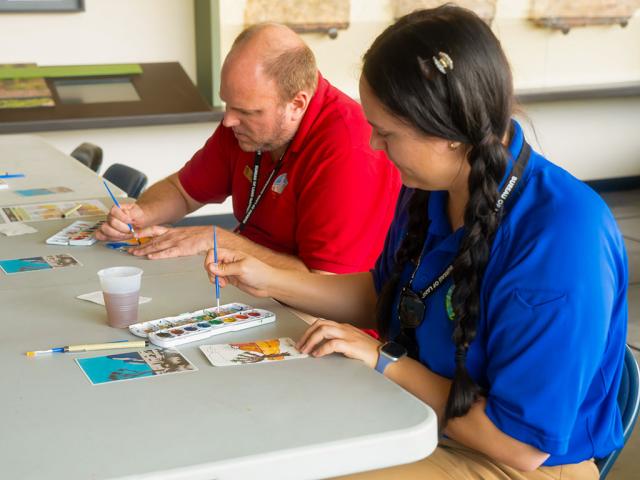
The program is held in the visitor center and led by interpretive rangers, with support coordinated through monthly planning between BLM team members including Sydney Tuiofea, Chad Hoing, and Michael Matthes. Scheduled sessions, like the night sky postcards workshop, are organized as 90‑minute hands‑on experiences where rangers guide participants through the month’s creative theme.
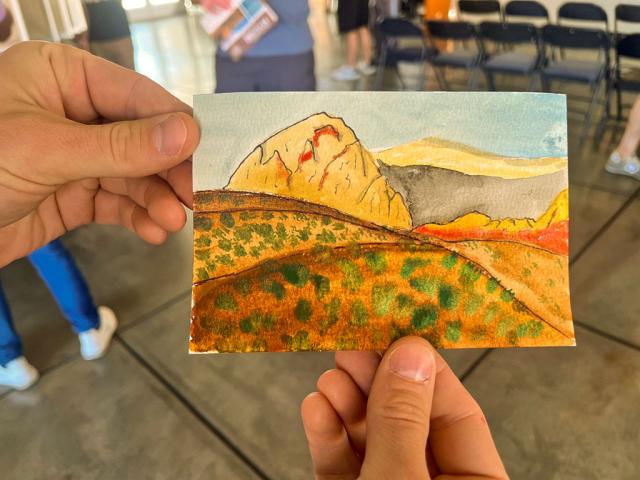
What makes "Postcards from Red Rock" especially meaningful is its accessibility. Visitors of all ages and skill levels can participate, and all supplies — from watercolor kits to glue sticks and paper stock — are provided through thoughtful planning and coordination with partners. These materials lists, compiled internally, help ensure that every session is fully stocked and ready for visitors to explore their creativity.
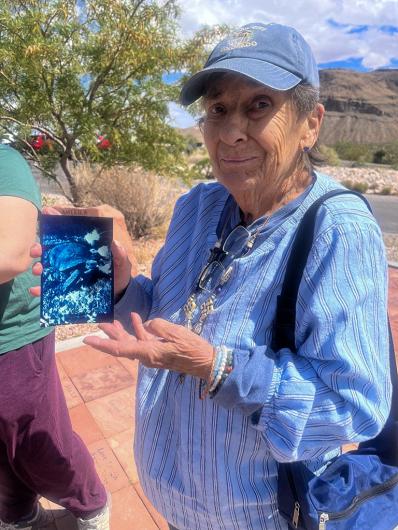
Each postcard created is unique, reflecting not only the visitor’s artistic choices but the impressions they take from their time on public lands. Some choose to mail their finished work to friends or family, while others keep it as a personal memory of their day in the canyon. Over time, the program has become a bridge between art, education, and stewardship, helping visitors build a deeper connection with Red Rock Canyon National Conservation Area through creativity.
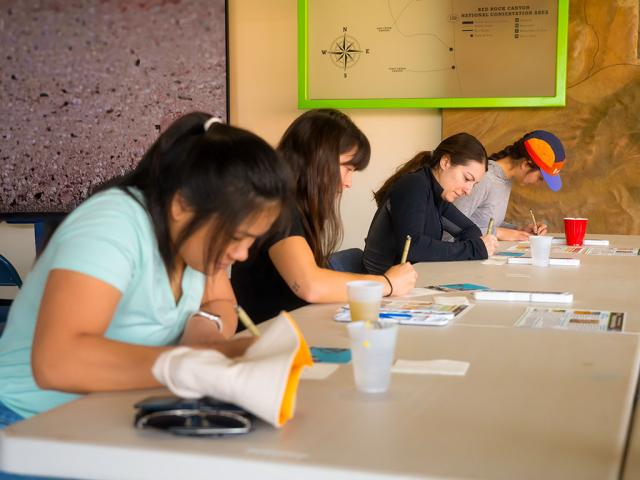
As the BLM celebrates 80 years of protecting public lands, programs like "Postcards from Red Rock" highlight how creativity and community engagement help strengthen the bond between people and the natural places they treasure. "Postcards from Red Rock" continues to grow each month, enriching the visitor experience and showcasing the interpretive team’s commitment to making public lands welcoming, engaging, and inspiring for all.
Join us for an event at the Red Rock Canyon Visitor Center! Discover new ways to connect with this iconic landscape through hands‑on activities, ranger programs, and experiences for all ages. Come explore, learn, and enjoy your public lands.
Related Stories
- Signs of Collaboration: Protecting Tortoises on Arizona Public Lands
- A Familiar Stretch of the Green River, a New Step for Seedskadee Lands
- BLM Brings Public Lands to Life at Scouting America’s 2026 National Jamboree
- BLM Showcases Local Recreation Treasures Ahead of National Hunting and Fishing Day
- BLM Arizona and Arizona Association of Conservation Districts: A Model Partnership for Landscape Conservation
Office
1000 Scenic Loop Drive
Las Vegas, NV 89161
United States